


USB-C PD vs QC: Which Charging Standard Should Furniture OEMs Spec in 2026
Walk into any electronics aisle or read any 2026 sourcing brief, and two names appear side by side: USB-C PD and QC. For an office furniture brand, a hotel project, or a system integrator, the choice is not academic — it determines which phones, tablets, and laptops charge at full speed when they plug into an embedded usb charging module inside a desk, conference table, or public counter. Choose wrong, and a module that looks identical to a competitor's underperforms in real guest hands.
This guide compares USB-C PD and QC as charging standards, explains what each one actually does, and gives furniture OEMs a practical specification for 2026. It stays technical but avoids assuming the reader is an electrical engineer.
USB-C PD is the open, connector-level standard; QC is a proprietary fast-charging protocol layered on top of USB.
A modern usb charging module rarely needs to "choose" one — multi-protocol hardware supports both, plus regional protocols, in a single port.
For 2026 projects, specify USB-C PD as the baseline and QC support as a compatibility requirement, not as the primary standard.
Wattage matters more than protocol branding: a 20 W PD port still charges a phone slowly; 45 W is the practical floor for laptops.
Specifiers should look for certified, thermally managed hardware rather than marketing labels on a spec sheet.
What USB-C PD Actually Is
USB-C PD (Power Delivery) is an open standard maintained by the USB Implementers Forum. It is built into the USB-C connector itself and negotiates voltage, current, and power between the device and the charger over the CC wire. The latest revisions support up to 100 W at 20 V in the common generation, and higher wattages in later revisions for specialized use. Detailed technical definitions are published by the USB Implementers Forum in the USB Type-C and PD specifications.
For furniture, the practical implication is simple: any USB-C PD port can charge any USB-C device at the highest speed that device and the module agree on. There is no brand lock-in. A laptop from one manufacturer and a phone from another both negotiate the same PD contract.
What QC (Quick Charge) Actually Is
QC (Quick Charge) is a fast-charging protocol originally developed for devices built around a particular silicon platform. It works by pulsing voltage on the USB data lines to identify a compatible charger and request a higher charging rate. Newer QC generations are largely aligned with USB-C and PD, but earlier generations were tied to specific hardware ecosystems and required a compatible charger to unlock the faster rate. A plain USB PD power contract, by contrast, works regardless of the device silicon.
The practical effect in 2026 is narrower than it used to be: most new phones already support PD, and QC compatibility is mostly relevant for older or region-specific devices that still rely on proprietary voltage negotiation.
Side-by-Side: PD vs QC
| Dimension | USB-C PD | QC (Quick Charge) |
|---|---|---|
| Ownership | Open standard, USB Implementers Forum | Proprietary protocol tied to a specific silicon ecosystem |
| Primary connector | USB-C by design | Originally USB-A; newer generations use USB-C |
| Typical wattage | Up to 100 W and above in later revisions | Up to around 100 W in recent generations |
| Device compatibility | Works with any PD-capable device, any brand | Fast charging only when device and charger share the same QC generation |
| Forward compatibility | Native to the connector; future-proof for laptops and accessories | Legacy value for older devices; declining relevance for new product design |
| Best spec as | Baseline standard for every new module | Compatibility requirement to cover legacy devices |
Why Multi-Protocol Modules Solve the Choice Problem
In practice, the PD-vs-QC framing is outdated for a 2026 usb charging module. Modern embedded hardware does not pick one protocol. It combines several — USB-C PD, PPS (Programmable Power Supply), QC, and regional fast-charging protocols such as AFC, SCP, and FCP — inside a single compact module. The module negotiates the fastest rate each connected device supports, automatically.
This is why specifiers rarely see a PD-only or QC-only choice on a serious OEM module. The real buying decision is whether the module lists all the relevant protocols on its spec sheet, whether it carries proper safety and EMC certification, and whether its thermal design supports continuous embedded use in furniture.
What the Regional Protocols Actually Cover
Beyond PD and QC, several regional fast-charging protocols matter in mixed fleets. AFC is common on devices built around a particular Korean silicon platform; SCP and FCP appear on Android devices shipped through Chinese supply chains; Apple's own charging profile is handled through standard BC 1.2 / DCP modes. A multi-protocol usb charging module supports all of these in hardware, so a phone that arrives from one region charges at its fastest rate, while a laptop from another manufacturer negotiates PD without conflict. The buyer does not need to configure anything — the module picks the correct handshake per device.
What Furniture OEMs Should Specify in 2026
For a desk, conference table, hotel room, or public counter, a practical specification looks like the table below. It assumes a USB-C plus USB-A mix, which remains the safest port combination for mixed fleets of devices.
| Spec point | Recommended value for 2026 projects | Why it matters |
|---|---|---|
| Baseline standard | USB-C PD (PD 3.0 or later) | Covers new phones, tablets, and laptops without brand lock-in |
| Compatibility protocols | PPS, QC, AFC, SCP, FCP, common BC 1.2 / DCP modes | Covers older and regional devices at their fastest supported rate |
| Port mix | One USB-C + one USB-A per module position | Reaches the widest device population without user adapters |
| Wattage for laptop charging | 45 W minimum on the USB-C port; 65 W for working tables | Below 45 W, laptops charge slowly or not at all |
| Certification | IEC 62368-1 aligned, CE / CB / VDE where the market requires | Commercial furniture cannot rely on uncertified adapters |
| Housing | UL94 V-0 flame-retardant, thermally optimized for embedded use | Embedded modules run hot; poor thermal design shortens life |
For EU-facing products, modules should also align with applicable ecodesign requirements, such as Regulation (EU) 2019/1782, and relevant safety and EMC standards including IEC 62368-1. These are baseline expectations for any usb charging module sold into commercial furniture projects, not premium extras.
How Charging Speed Is Actually Measured
A spec sheet that says "65 W" is not the same as a user actually receiving 65 W. The real charging speed is the result of a three-way negotiation: the module's capability, the device's request, and the cable's ability to carry the current. A module rated for 65 W will not deliver 65 W through a thin USB-A-to-C cable that only supports 60 W. It will negotiate down to the highest rate all three elements agree on.
This is why specifiers should not read a wattage number in isolation. A usb charging module paired with a certified, rated cable performs very differently from the same module paired with an uncertified cable that the user brings from home. In commercial installations, the practical implication is clear: the module's spec sheet should describe its output capability, and the cable choice — where the project supplies one — should match that capability.
Cable Quality Matters As Much As the Module
One of the most common sources of "why does it charge slowly" complaints is not the module at all, but the cable. USB-C cables have different current ratings and different certification levels. A cable that only supports 3 A will limit even a 100 W module to around 60 W, regardless of what the device asks for. In meeting rooms and hotel rooms where cables are shared or left out for guests, this mismatch shows up as inconsistent charging experience.
For furniture projects that supply their own cables, specify cables rated for the expected wattage, with proper e-marker chips where high-current PD is used. For projects that rely on user-supplied cables, the module should still be designed to negotiate safely with any cable, and the spec sheet should not overstate performance based on an ideal cable that the user will not actually bring.
Common Specification Mistakes to Avoid
| Mistake | Consequence | Better practice |
|---|---|---|
| Specifying "PD only" and dropping legacy protocols | Older regional devices charge slowly | Require multi-protocol support including QC and regional protocols |
| Buying by QC label alone | Missing PD, so laptops charge poorly | Treat PD as the baseline; QC as compatibility |
| Choosing 20 W for meeting-room use | Laptops do not charge reliably | Use 45 W minimum where laptop use is expected |
| Ignoring thermal and fire ratings | Reliability and safety risk in embedded furniture | Require V-0 housing and certified thermal design |
| Accepting unverified protocol claims | Spec sheet overstates real-world charging speed | Ask for test reports on each listed protocol |
Test Before You Sign Off
Before committing to a production run, ask the supplier for two sample units and test them with the actual devices the project expects to see in the field. Charge a phone, a thin-and-light laptop, and an older USB-A device, and observe whether each negotiates its expected fast-charge rate. A sample test catches the gap between a marketing spec sheet and real-world behavior that no datasheet can describe. It is also the cheapest insurance a furniture OEM can buy against a batch of modules that disappoint end users on day one.
Summary
USB-C PD and QC are not really competitors for a 2026 furniture OEM. PD is the open, connector-level baseline that every new device expects; QC is a compatibility layer that still covers a meaningful population of older and regional devices. The right move is to specify USB-C PD as the foundation, require QC and regional fast-charging protocol support as a compatibility checklist, and evaluate the module on wattage, certification, and thermal design rather than on whichever protocol appears largest on a marketing leaflet. Always request samples and test them with the actual devices the project will serve. A well-chosen usb charging module then simply charges whatever the visitor places on the table, at the fastest speed that device supports.
Specifying a furniture charging project in 2026?
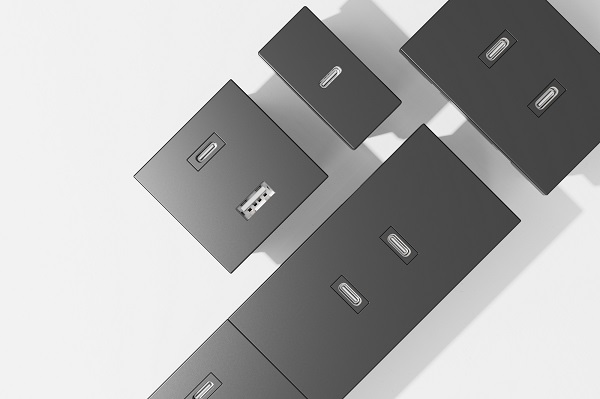
Glob-el designs and manufactures multi-protocol usb charging module hardware for furniture brands and system integrators. Modules cover USB-C PD, PPS, QC and regional protocols from 20 W to 140 W, in standard 22.5×45 mm, 45×45 mm, 67.5×45 mm and 90×45 mm sizes, with CE, CB and VDE alignment and UL94 V-0 housings.
Request a Custom QuoteFAQ
Is USB-C PD better than QC for new furniture projects?
PD should be the baseline, because it is the open standard that new phones and laptops expect. QC support is still worth requiring for compatibility with older and regional devices, but it should not replace PD as the primary specification.
Do I need both PD and QC on a desk charging module?
Yes, in practice. A single multi-protocol module handles both automatically, so users do not need to know which protocol their phone supports. Look for modules that list PD, PPS, QC and common regional protocols on the spec sheet.
What wattage should a furniture USB charging module deliver?
20 W is acceptable for phone-only use. For meeting rooms, hotel rooms and working desks, specify 45 W minimum on the USB-C port, and 65 W where laptops are expected to charge.
Will a PD module charge QC-only devices?
A pure PD port will not trigger a proprietary QC fast-charging handshake. A multi-protocol module that includes QC support will. This is why modern embedded modules list several protocols rather than relying on PD alone.
Is a more expensive branded chipset required for reliable fast charging?
What matters is certified hardware, real test reports, and a thermal design that suits embedded furniture use. Protocol support and wattage on the spec sheet should be backed by test documentation, not brand names.
What certification should a furniture USB module carry for the EU market?
Look for IEC 62368-1 alignment, CE marking, and relevant CB and VDE support, plus compliance with EU ecodesign requirements for external power supplies. Ask suppliers for test reports rather than declarations.


