


From Chaos to Universality:
The Evolution of USB Technology
"Technology changes life" is not just an empty phrase. From the chaotic interfaces of the early days to today's universal port, USB has revolutionized how we connect.
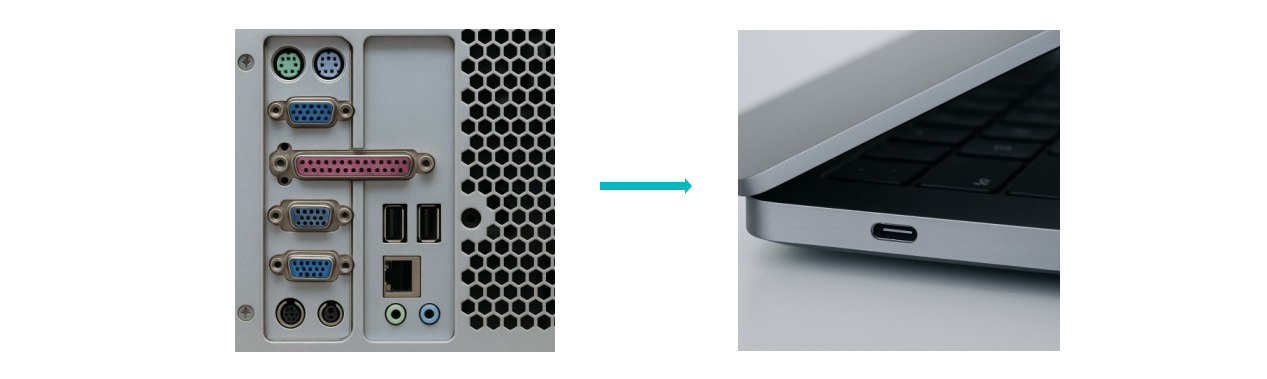 The port on the back of an old computer host vs. the USB-C on a modern laptop
01 The Birth of USB: Solving the "Plague of Interfaces"
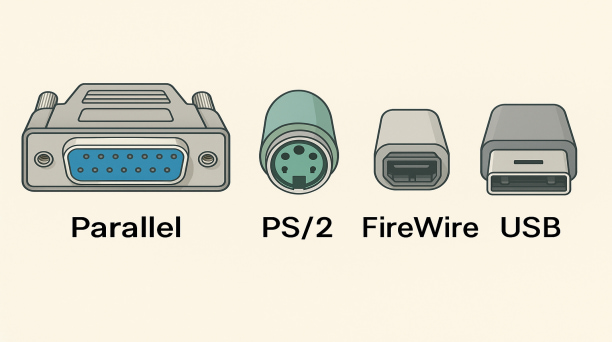
In the early days, computer hosts were equipped with a wide variety of incompatible data interfaces (Serial, Parallel, PS/2, Gameport). The wiring was chaotic, and expansion was limited.
Consumers urgently needed a universal interface. In 1994, Intel, along with several other tech giants, proposed the USB transfer protocol. By 1995, the USB-IF (USB Implementers Forum) was established to accelerate market adoption.
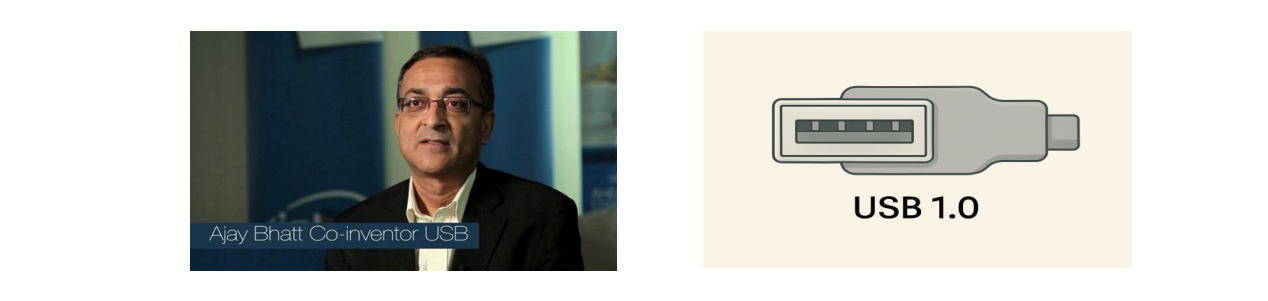
Ajay Bhatt first proposed the concept of the "Universal Serial Bus." With Intel's support, the USB 1.0 specification was announced in January 1996. Although it offered speeds of 1.5 Mbps and 12 Mbps, its initial impact was limited due to a lack of device support.
02 The Leap: From USB 1.1 to 3.2
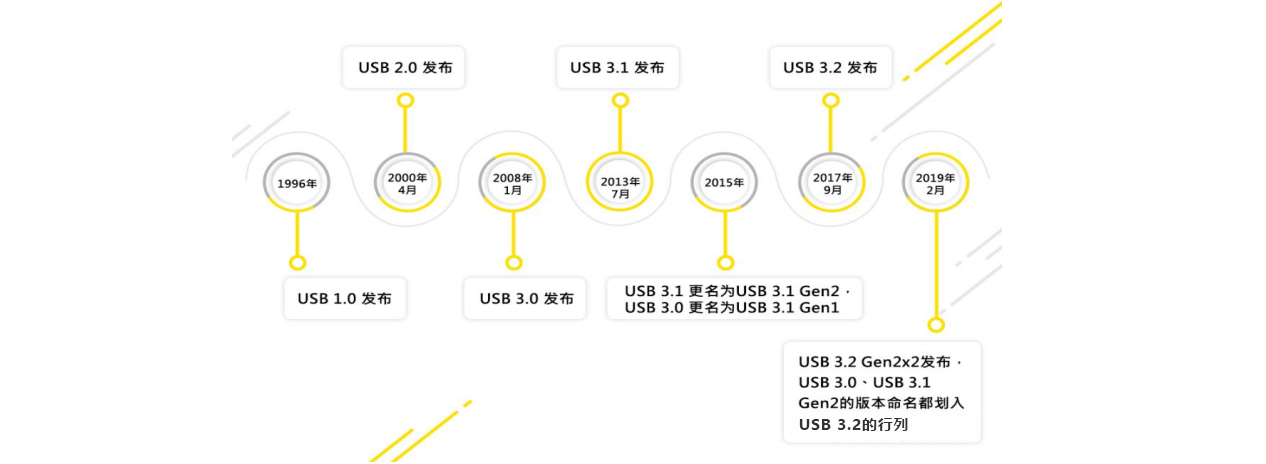 Visual History of USB Speed Standards
| Year | Version | Transfer Speed | Time to Download 1GB | Significance |
|---|---|---|---|---|
| 1996 | USB 1.0 | 1.5 / 12 Mbps | 1.5h / 12min | Limited initial impact. |
| 1998 | USB 1.1 | 12 Mbps | 12 min | Solved latency, wider adoption. |
| 2000 | USB 2.0 | 480 Mbps | 17 sec | Market share >90% (by 2012). |
| 2008 | USB 3.0 | 5 Gbps | 1.6 sec | Major performance leap. |
| 2017 | USB 3.2 | 20 Gbps | 0.5 sec | Multi-channel parallel transmission. |
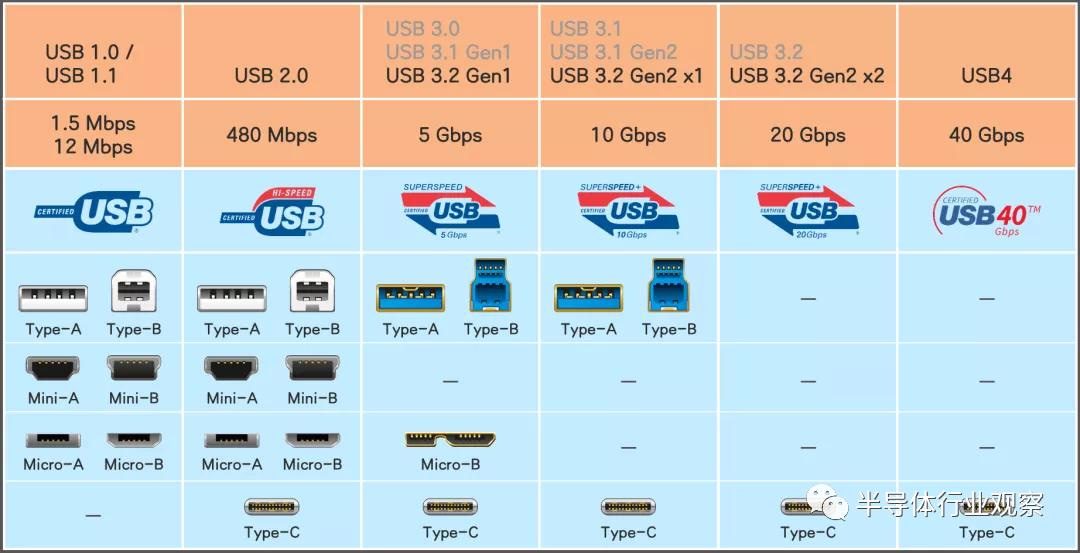
There is no absolute correlation between the USB transfer standard (Speed) and the USB interface (Shape).
Even a device using the modern USB Type-C interface might only support the older USB 2.0 transfer standard. Always check the specs, not just the plug shape!
03 USB4 2.0: The Core Upgrades
Released in late 2022, the USB4 2.0 specification pushes the boundaries of connectivity even further. Here are the highlights:


