


USB-C PD 3.1 for Furniture OEMs: The Power Guide
USB-C PD 3.1 for Furniture OEMs: Power Guide 2026
What Is USB-C PD 3.1 and Why Should Furniture OEMs Care?
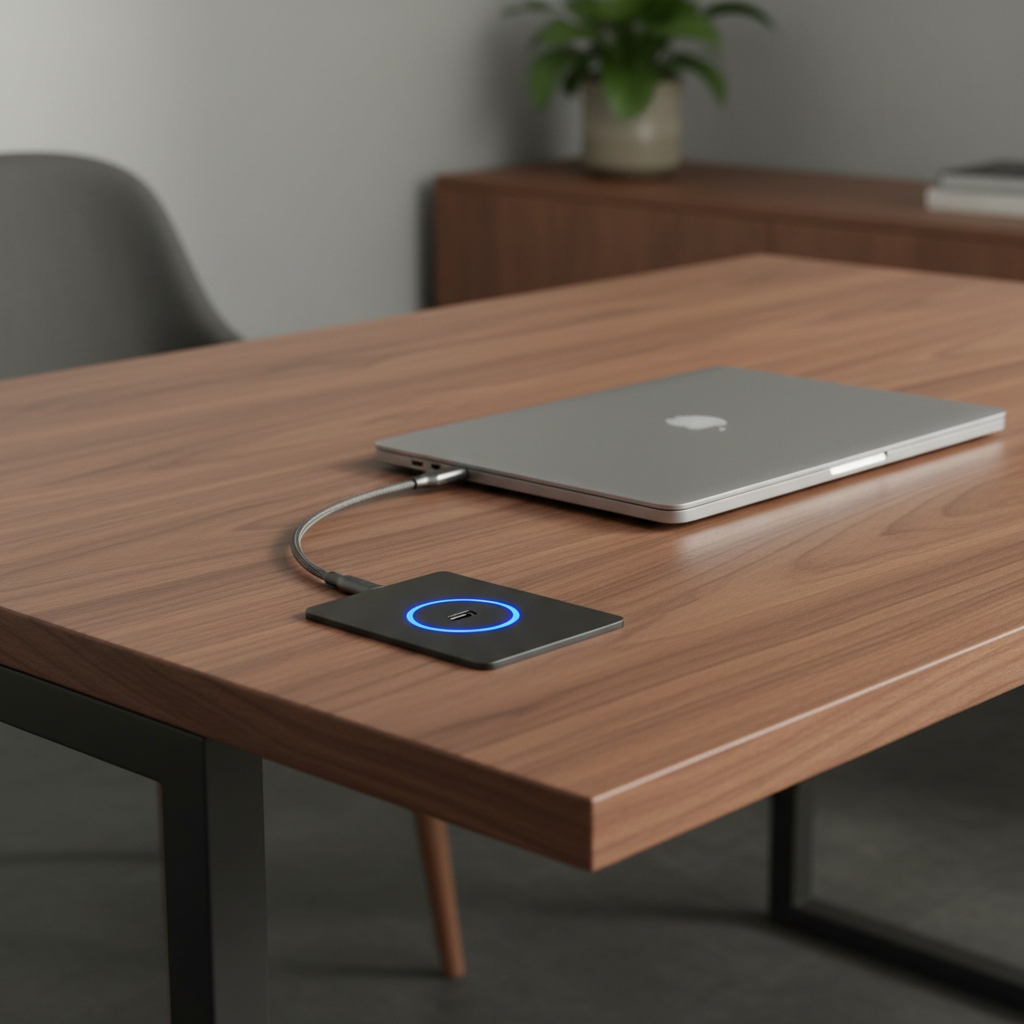
Imagine your office desk could fully charge a high-performance laptop — no separate power brick, no cable clutter — using a single USB-C port built flush into the desk surface. That is exactly what USB-C Power Delivery 3.1 (PD 3.1) makes possible, and in 2026, it is rapidly becoming the expected standard for premium European office furniture.
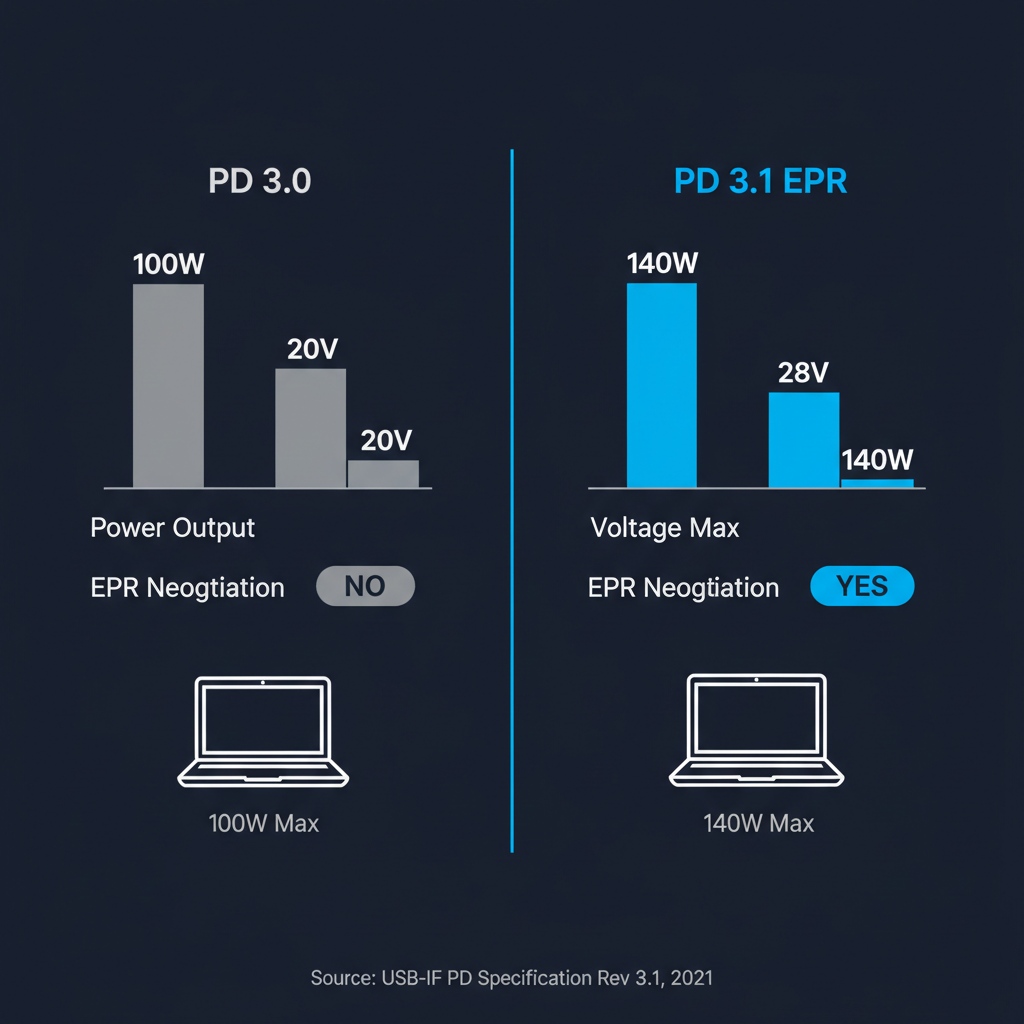
USB-C PD 3.1 is the latest version of the USB-IF fast-charging specification. Unlike its predecessor (PD 3.0, which maxed out at 100W), PD 3.1 introduces Extended Power Range (EPR) — a new set of voltage levels that push output up to 140W (28V × 5A), 180W, or even 240W. For furniture-embedded applications, the commercially relevant range is 65W to 140W: powerful enough to charge any laptop on the market today from a single desk-integrated port.
The USB-IF's IEC 62680 EU Conformity programme went live in 2024, meaning PD 3.1 modules for the EU market now have a standardised certification pathway. Combined with the EU Ecodesign Regulation 2025/2052 taking effect, this is the right moment for furniture OEMs to lock in their PD 3.1 module specifications for the 2026–2027 product generation.
Sufficient for most laptops but not MacBook Pro 16" at full load or professional workstations.
Covers every commercial laptop on the EU market as of 2026, including Apple, Dell XPS 17, and HP ZBook series.
PD 3.1 vs PD 3.0: What Changed for Embedded Modules?
For a furniture OEM deciding between PD 3.0 and PD 3.1 modules, the decision is not just about maximum wattage. PD 3.1 introduces architectural changes that affect interoperability, safety, and the end-user experience in furniture applications.
The most critical difference is the EPR augmented PDO handshake. When a PD 3.1 device requests power above 100W, the charger and device engage in an additional negotiation step (the EPR mode entry) before the high-voltage supply is enabled. This protects both the device and the cable from overcurrent events. Older PD 3.0 modules cannot participate in this handshake — they simply cannot deliver above 100W, regardless of cable quality.
| Feature | USB-C PD 3.0 | USB-C PD 3.1 (EPR) | Relevance for Furniture OEMs |
|---|---|---|---|
| Max Power Output | 100W (20V × 5A) | 140W / 180W / 240W | PD 3.1 needed for premium laptop charging (MacBook Pro 16", HP ZBook) |
| Voltage Range | Up to 20V | Up to 48V (EPR: 28V, 36V, 48V) | 140W is achievable at 28V/5A — safe for desk module design |
| Cable Req. (>60W) | E-Marker cable (5A) | E-Marker cable (5A, 240W IEC 62680-1-3:2022) | Bundle specification must explicitly call out 5A E-Marker cable |
| Handshake Protocol | PDO negotiation | EPR augmented PDO + EPR mode entry | Requires USB-IF interoperability test report with 3+ device families |
| Backward Compatibility | PD 2.0 / 3.1 devices | Fully backward compatible | No user confusion — older phones and devices still work correctly |
Early-batch PD 3.1 modules from 2023–2024 have known EPR mode entry bugs where some Dell and HP laptop models refuse to negotiate above 100W. Always request a USB-IF EPR interoperability test report dated 2025 or later to confirm this issue is resolved in the module firmware.
EU Compliance Requirements for PD 3.1 Furniture Modules
Selling a furniture-embedded PD 3.1 module in the European Union is not as simple as "it charges a laptop, so it works." There are five distinct regulatory requirements that must be met, and each requires specific documentation before your product can legally ship to EU buyers.
Think of it like a passport for your product: the CE mark is the stamp on the cover, but behind it are five different visa pages — and customs officers (i.e., EU market surveillance authorities) can ask to see any of them at any time. Missing even one documentation layer can result in a product recall, market ban, or import hold at the EU border.
| Certification / Standard | Requirement Type | What It Verifies | Status (2026) |
|---|---|---|---|
| CE Marking (LVD 2014/35/EU) | Mandatory | Electrical safety — insulation, creepage, clearance distances for 230V AC input | Required for all EU market entry |
| CE Marking (EMC 2014/30/EU) | Mandatory | Electromagnetic emissions — module must not interfere with other desk electronics | Required for all EU market entry |
| IEC 62368-1:2023 | Mandatory | Audio/video, IT, and communications equipment safety | Old IEC 60950-1 reports no longer accepted |
| IEC 62680-1-2 (USB-IF) | Highly Recommended | USB-C and PD protocol interoperability | USB-IF EU Conformity programme active |
| EU Ecodesign 2025/2052 | Mandatory | Energy efficiency tiers — active efficiency ≥87%, standby ≤0.5W | In force November 2025 |
| ENEC Certification | B2B Preferred | Third-party electrical safety certification widely recognised in EU | Speeds up buyer qualification significantly |
Choosing the Right Wattage: 65W, 100W, or 140W?
One of the most common procurement mistakes furniture OEMs make is over-specifying power — paying for 140W EPR capability when 65W would satisfy 90% of actual end users. The reverse mistake — under-specifying — results in frustrated end users whose laptops charge slowly or show "not charging" warnings. Here is a practical framework:
General office hotdesk furniture, coworking spaces, hotel rooms. Charges MacBook Air, Dell XPS 13, tablets.
Standard SKU (Baseline Cost)Standard office desk, conference room tables. Charges MacBook Pro 14", most 14"–15" business laptops.
Most Versatile (+15-20% Cost)Executive desk, design studio workstations. Charges MacBook Pro 16", workstation-class laptops.
Premium SKU (+30-40% Cost)5 Steps to Specify a PD 3.1 Module for Your Furniture OEM Line
Define the Target Device Profile
Match the highest-wattage device to your module specification. If your key customer segment is corporate offices (primarily 13"–15" laptops), 100W PD 3.1 is the optimal specification. If your customer is architecture firms or video production studios, specify 140W EPR.
Confirm the EU Compliance Documentation Package
Before placing any production order, require your supplier to provide: (1) CE Declaration of Conformity citing LVD and EMC directives, (2) IEC 62680-1-2 USB-IF test report, (3) IEC 62368-1:2023 safety certificate, (4) EU Ecodesign 2025/2052 efficiency data sheet. These are your legal protection.
Verify Physical Dimensions for Cutout Compatibility
Standard EU furniture cutout sizes: 60×60mm (single), 80×80mm (dual), 120×60mm (triple). Confirm your PD 3.1 module fits the template in your assembly process. For 100W+ modules, request thermal data — IEC 62368-1 requires a minimum 10mm air gap from adjacent combustible materials.
Test Interoperability with Your Target Device Mix
Before mass production, conduct a bench test with at least: one Apple MagSafe-capable device, one Dell docking scenario, and one Lenovo business laptop. Verify the EPR mode entry handshake works correctly. Request the supplier's USB-IF EPR interoperability test report.
Specify E-Marker Cable Requirements
If your furniture module ships with a USB-C cable, specify: 5A rated, E-Marker chip embedded, certified to IEC 62680-1-3:2022. Standard cables without E-Marker are electronically limited to 60W by the PD protocol — end users will not receive the full 140W your module supports.
GLOB-EL Power's 2026 OEM module range includes USB-C PD 3.1 at 65W, 100W, and 140W EPR variants — all CE certified under LVD/EMC, IEC 62368-1:2023 compliant, and EU Ecodesign 2025/2052 verified. Available in 60mm and 80mm cutout formats with standard T-slot mounting.
[View GLOB-EL PD 3.1 Module Specifications →]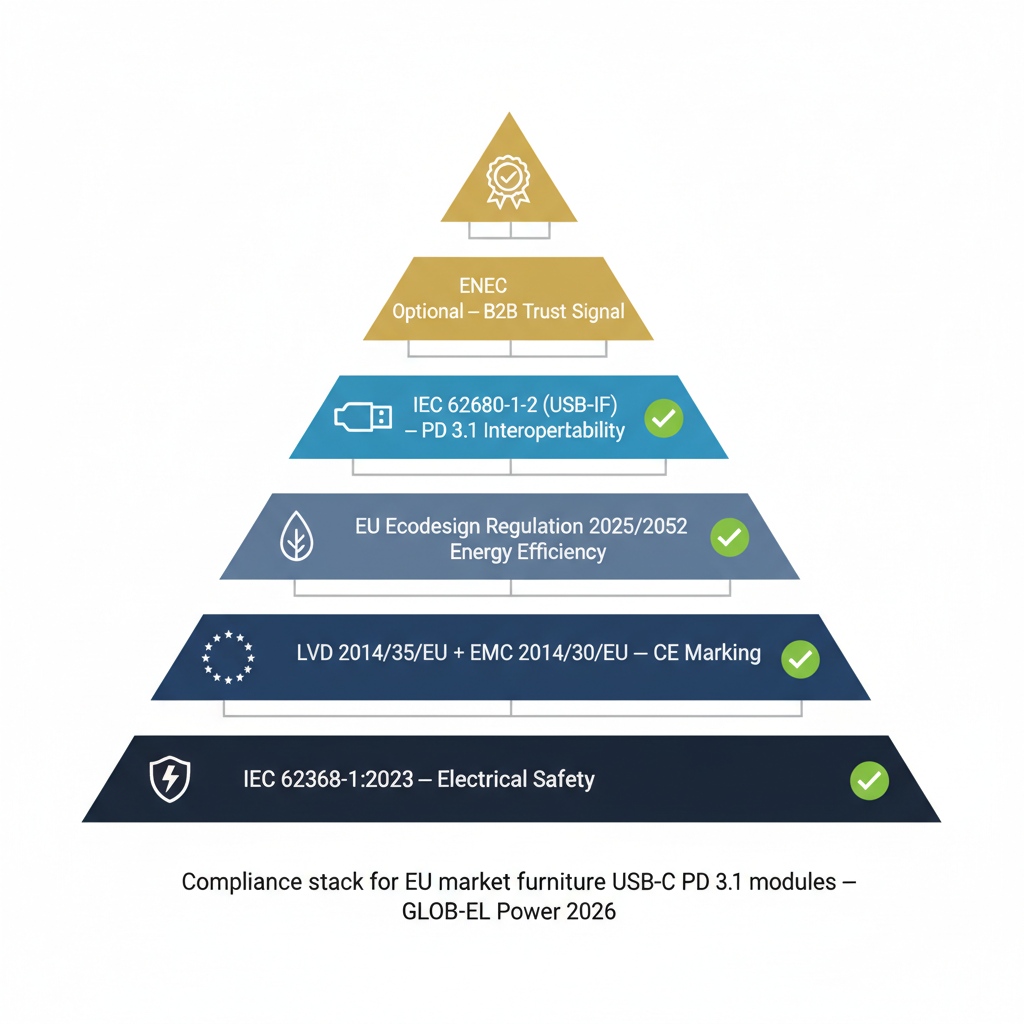
Frequently Asked Questions
This article is published by GLOB-EL Power, a manufacturer of EU-certified furniture-embedded USB-C charging modules. For OEM procurement enquiries, visit glob-el-power.com/contact.
Sources: USB Power Delivery Specification Rev 3.1 (USB-IF, 2021) | IEC 62368-1:2023 (IEC, 2023) | EU Ecodesign Regulation 2025/2052 | USB-IF EU Conformity Programme (IEC 62680) | IEC 62680-1-3:2022 USB Type-C Cable Standard


