Consumer Tech Guide What Is USB-C Charging?Explained for Beginners |
USB-C charging is a method of transferring electrical power to your devices through a small oval-shaped connector that fits the same way up every time. Unlike older USB-A or micro-USB plugs, USB-C carries both power and data in a single cable. When paired with a compatible charger, USB-C enables fast charging at speeds up to 240W under the USB Power Delivery 3.1 standard.  The modern universal standard: One USB-C cable to power laptops, tablets, and smartphones. |
Key Facts at a GlanceUSB-C is defined by the USB Implementers Forum (USB-IF); it handles up to 240W under USB PD 3.1, compared with 18W maximum for standard USB-A. USB Power Delivery (USB PD) is the fast-charging protocol built into the USB-C specification; it can charge a typical smartphone to 50% in 25-30 minutes. The EU Ecodesign Regulation 2024/1781 mandates USB-C as the standard charging interface for smart devices from December 2024. GaN (gallium nitride) USB-C chargers convert electricity at up to 96% efficiency, wasting significantly less energy as heat. A single 65W GaN USB-C charger can replace separate chargers for your smartphone, tablet, and laptop.
|
In Short: USB-C charging uses a reversible oval connector that works with any device sharing the same standard. Under EU Regulation 2024/1781, all new smartphones and tablets sold in Europe must use USB-C, making a single quality GaN USB-C charger the practical solution for all your devices.
USB-C vs. Older Connectors: Why It Matters for YouBefore USB-C became the standard, consumers dealt with a frustrating mix of connector types. Older Android phones used micro-USB. Earlier iPhones used the Lightning connector. Laptops often required their own proprietary barrel plugs. Each device needed its own cable and charger. Travelling meant carrying a bundle of different cables and hoping you packed the right ones. USB-C solves this problem. The connector is symmetrical, so there is no wrong way to plug it in. More importantly, USB-C is a universal standard adopted across the electronics industry. Your new Android smartphone, your Windows laptop, your iPad, and many accessories all use the same USB-C port. One cable can connect all of them to the same charger. The physical connector is only part of the story. The real benefit comes from what USB-C can carry. USB-C charging through a cable supporting USB Power Delivery can transfer far more electrical power than older USB-A cables. This is why USB-C charging is genuinely faster. The cable carries the charge instruction between your charger and device so each knows what the other can handle. For households with multiple devices, this consolidation has practical value. One 65W GaN USB-C charger with two ports can simultaneously charge your smartphone at 45W while charging your wireless earbuds at 18W. You need one plug socket instead of two. How Fast Charging Actually Works: USB PD ExplainedWhen you plug your phone into a USB-C charger, the two devices have a brief electronic conversation before charging starts. Your phone tells the charger how much power it can accept. The charger responds with how much it can supply. They agree on a power level and charging begins at that rate. This handshake process is called USB Power Delivery (USB PD) negotiation. Without this negotiation, your phone would receive only the default 5W. With USB PD, it can receive up to 100W depending on your device and charger combination. This is why the cable matters as much as the charger. A cable that does not support USB PD will not carry the negotiation signal correctly. GaN technology improves this picture further. Gallium nitride semiconductors switch electricity at much higher frequencies than older silicon components, producing less wasted heat. A 65W GaN USB-C charger is typically 40% smaller than an equivalent silicon charger. The USB-IF specification defines these technical requirements. | 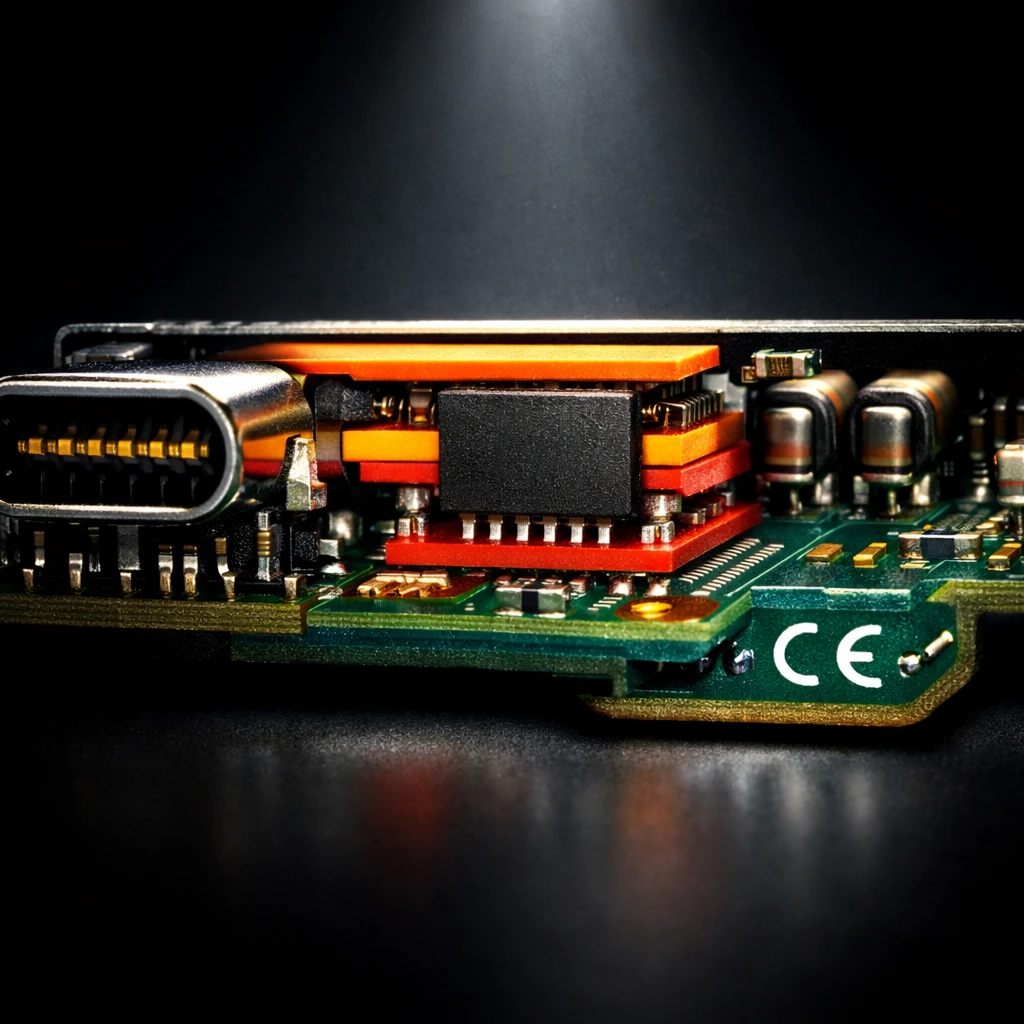 |
Charging Speeds Compared| Charging Method | Typical Output | Time to 50% (Phone) | Suitable For |
|---|
| Standard USB-A | 5W | 90-120 mins | Overnight charging | | USB-C (PD 2.0) | 18W | 30-40 mins | Smartphones | | USB-C (PD 3.0) | 45W | 20-25 mins | Phones & tablets | | USB-C (PD 3.1) | 65W - 240W | 15-20 mins | Laptops & everything |
How to Choose the Right USB-C Charger: 5 Practical Tips| 1 | Look for USB Power Delivery (USB PD) A USB-C charger without USB PD support will charge your phone at only 5W regardless of what your device can accept. For a laptop, you need USB PD 3.1 at 65W or higher. | | 2 | Choose GaN over standard silicon GaN chargers carry more power in a smaller physical size and run cooler. A 65W or 100W GaN charger with two or three ports lets you replace several bulky adapters with one. | | 3 | Verify CE marking for Europe Any charger sold legally in the EU must carry CE marking. Unbranded chargers priced below EUR 10 for 65W+ output are a reliable indicator of cut corners in safety testing. | | 4 | Check cable quality separately Your charger and cable must both support USB PD. A USB-C cable rated for 60W will limit a 100W charger to 60W. Look for 240W-capable cables for full speed. | | 5 | Match wattage to your devices A 240W charger is unnecessary if your biggest device is a 65W laptop. For most consumers with a phone, tablet, and laptop, a 65W to 100W dual-port GaN charger covers all needs efficiently. |
 |
Pro Tip: For a more detailed look at how USB-C charging integrates into home and workspace furniture with built-in charging points, explore our USB Desk Socket for Home Office Guide to see what to look for when evaluating desks with embedded USB-C ports. Frequently Asked QuestionsWill a USB-C charger damage my phone if it supplies more watts than my phone needs?No. USB Power Delivery uses a negotiation process so your phone only draws the power it can safely accept. A 100W USB-C charger will not force 100W into a phone that is rated for 25W. The phone's charging circuit requests the wattage it needs and the charger supplies exactly that amount. | Can I use a USB-C charger from one brand with a device from a different brand?Yes. USB-C and USB Power Delivery are universal open standards. A USB-C charger from any reputable brand will work with any USB-C device from any other brand. The charging speed depends on the power level agreed between your specific charger and device, not on brand matching. | Is wireless charging faster or slower than USB-C charging?Wireless charging is generally slower than USB-C fast charging. Most Qi wireless chargers operate at 5W to 15W. By comparison, a USB-C charger with USB PD 3.0 delivers 45W. For a full charge from empty, USB-C fast charging is typically two to three times faster than wireless charging. | What does the EU regulation requiring USB-C mean for consumers?EU Ecodesign Regulation 2024/1781 requires all smartphones, tablets, and portable speakers sold in Europe to include a USB-C port for charging from December 2024. This means you can buy a single quality USB-C charger and use it with all your new devices regardless of brand, significantly reducing electronic waste. |
Upgrade Your Charging ExperienceGLOB-EL designs and manufactures USB-C charging modules used in furniture, hospitality equipment, and consumer electronics across Europe. From single-port adapters to multi-port 100W GaN modules, we power your life safely. Discover GLOB-EL Solutions |
|


