


Do Public USB Charging Module Need Different Compliance Than Home Chargers?
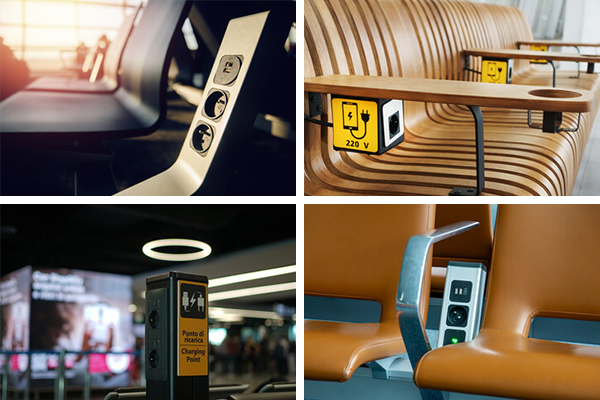
A USB charging port looks like a USB charging port whether it sits in a bedroom nightstand or in an airport waiting area. But the requirements behind that port are not the same. A home charger is used a few times a week, monitored by its owner, and plugged into a familiar circuit. A public-space usb charging module is plugged in 24 hours a day, touched by hundreds of different users, and often left unattended. That difference in duty cycle and supervision changes the compliance picture.
This guide explains, in practical terms, whether public USB charging modules need different compliance than home chargers — and what specifiers, building owners, and furniture integrators should require when they source a module for a commercial installation.
Yes: public and commercial installations carry stricter safety, EMC, durability, and fire-performance expectations than a home charger.
The key difference is not the USB output itself, but continuous unattended operation, higher plug-cycle wear, and the surrounding furniture material.
For the EU market, a public usb charging module should meet IEC 62368-1 aligned safety, EMC, RoHS/REACH, and ecodesign expectations.
Material fire rating (such as UL94 V-0) and thermal design matter far more in embedded public furniture than in a home charger.
Do not assume a consumer charger is automatically suitable for a commercial installation; ask suppliers for test reports.
Why Public-Space Use Is Different
Three operating conditions separate public from home use:
Duty cycle. A public module is energized continuously, often for years, while a home adapter is plugged in intermittently.
Plug-cycle wear. A public port sees hundreds of insertions a month from unfamiliar users; a home port sees a handful.
Supervision. A public installation is unattended. If a device shorts, overheats, or a cable is forced in, no owner is there to react in the first seconds.
Those three conditions push the product design toward higher-quality materials, better thermal management, and documented safety testing — exactly the requirements a consumer home charger is not built to demonstrate.
Safety Standards: What Applies Where
| Topic | Typical home charger | Public / commercial usb charging module |
|---|---|---|
| Operating time | Intermittent, supervised | 24/7 unattended, multi-year service life |
| Safety standard family | Covers consumer power adapters; often tested for household use | Aligned with IEC 62368-1 for audio/video and IT equipment, used in commercial furniture |
| EMC | General household limits | Commercial IT equipment limits, e.g. EN 55032 / EN 55035 for emissions and immunity |
| Material fire rating | Often a general plastic enclosure | UL94 V-0 flame-retardant housing expected in embedded furniture |
| Durability | Consumer plug cycles | High plug-cycle count and terminal reliability for public use |
| Certification marks | Basic CE / consumer marks | CE, CB, and where relevant VDE / ENEC for commercial acceptance |
Key Compliance Differences Explained
Safety Standard: IEC 62368-1 as the Baseline
The reference safety standard for USB power used in commercial furniture and IT peripherals is IEC 62368-1, which covers audio/video, information and communication technology equipment. For EU-facing products, a commercial usb charging module should be designed and tested to this family, with IEC 62368-1 as the baseline reference. A home adapter may be tested against a different standard family that assumes a supervised, household environment.
EMC: Commercial Equipment Limits
Public modules embedded in office furniture, hotel furniture, or public waiting areas sit alongside IT equipment. They should meet commercial EMC limits such as EN 55032 (emissions) and EN 55035 (immunity), because a noisy charger in a shared workspace can interfere with nearby devices. A home charger is not always expected to meet the same immunity level.
Fire Performance of the Housing
This is the most visible difference. Embedded modules sit inside wooden veneer, laminate, or plastic furniture that cannot breathe the way a standalone charger can. A UL94 V-0 flame-retardant housing and overtemperature, overcurrent, and short-circuit protection are baseline expectations for commercial hardware. A home charger often uses a simpler enclosure because it lives in open air.
Ecodesign and Efficiency
For the EU market, external power supplies must also meet ecodesign requirements, including Regulation (EU) 2019/1782 on external power supplies. Low standby power and high active efficiency matter both for energy bills and for reducing heat inside enclosed furniture.
RoHS and REACH
For products placed on the EU market, restricted-substance controls such as RoHS and REACH are not optional extras. They apply equally to commercial and consumer electronics, but in public procurement and furniture projects, suppliers are typically asked to provide documentation — not just a declaration.
Emergency Disconnect and Maintenance Access
In a supervised home installation, an occupant can simply unplug the charger. In a public installation, the building owner needs a planned way to isolate the circuit during maintenance or if a fault appears. This does not usually require a special switch inside each module; it requires that the trunking channel or the furniture cavity has an accessible junction or a clearly identified local circuit breaker. Specifiers should include this in the electrical drawing, not leave it to the installer on site. A public usb charging module that cannot be safely isolated for service becomes a maintenance liability the first time a fault appears.
What Specifiers Should Require for Public Installations
| Requirement | Why it matters |
|---|---|
| Designed and tested to IEC 62368-1 | Baseline safety for unattended IT equipment |
| CE, CB, and VDE / ENEC where the market expects them | Acceptance by building owners and installers |
| UL94 V-0 flame-retardant housing | Fire containment inside embedded furniture |
| Thermal design for continuous operation | Long service life in enclosed furniture cavities |
| Over-voltage, over-current, over-temperature and short-circuit protection | Safe behavior when unattended devices fail |
| Compliance with EU 2019/1782 and RoHS / REACH | Market access and procurement documentation |
| Test reports available on request | Evidence behind the spec sheet, not marketing text |
IP Rating and Physical Protection
In public spaces, the module is exposed to conditions a home charger never sees: spilled drinks in a hotel lounge, dust in a co-working open plan, cleaning chemicals wiped across a table in a waiting area, and the occasional kick from a shoe. The Ingress Protection (IP) rating describes how well the housing resists solid objects and water. For indoor public furniture, IP20 is the basic baseline; modules mounted near serving counters, cafes, or washroom-adjacent areas may need a higher rating depending on the site risk. Buyers should confirm the IP rating of the exposed face, not just the internal electronics.
Physical protection matters beyond water and dust. A public port is plugged and unplugged thousands of times a year. The connector terminals must survive repeated insertion without loosening, and the module housing should resist scratches and impact from bags, laptops, and cleaning equipment. A home charger rarely sees this kind of wear; a public usb charging module is expected to.
Lifecycle and Replacement Planning
Public installations run for years without being routinely pulled out and inspected. This changes the buying decision in two ways. First, the supplier's long-term availability matters: a module that is discontinued two years after installation leaves the site owner stuck with a spare-parts problem. Second, replacement and upgrade should be planned into the maintenance budget, not treated as a surprise expense.
Specifiers should ask three lifecycle questions before ordering: how long will this exact model remain in production, what is the expected service life under continuous use, and how easy is a single-module replacement without dismantling the surrounding furniture? A clip-in modular design answers all three questions better than a sealed fixed unit that requires the whole panel to be opened.
The Documentation Package Public Procurement Actually Needs
Public and tender projects do not run on a spec sheet. They run on a file. When a building owner, a hotel group, or a public transport operator evaluates a supplier, the question is not "is it certified?" but "can you hand over a complete file when we ask?" A practical documentation package typically includes the IEC 62368-1 test report, the EMC test report, the CE declaration of conformity, the CB certificate if used, the UL94 material fire-classification evidence, RoHS and REACH declarations, and the wiring and installation instructions for the integrator.
Suppliers who can produce this file on request save the buyer weeks of follow-up. Suppliers who can only produce a product datasheet create procurement risk that surfaces at acceptance time, not at order time. For a specifier, asking for the documentation package early is one of the fastest ways to separate commercial-grade suppliers from those repackaging consumer adapters.
It is also worth asking whether the supplier can provide a Declaration of Conformity signed by the manufacturer of record, not a trading company. In public procurement, traceability matters, and a file that chains the module back to an actual manufacturer is far easier to defend during audit than a file that only lists a middleman.
Common Sourcing Mistakes
| Mistake | Consequence | Better practice |
|---|---|---|
| Buying a consumer home charger and installing it in public furniture | Short service life, higher failure rate, compliance gaps | Source a commercial-grade embedded module |
| Trusting the spec sheet without test reports | Overstated certifications and thermal claims | Ask for IEC 62368-1 and EMC test reports |
| Ignoring housing fire rating | Higher fire risk inside enclosed furniture | Require UL94 V-0 housing |
| Buying without RoHS / REACH documentation | Procurement and customs issues in the EU | Request documentation before ordering |
| Choosing the cheapest module per port | Replacement cycles shorten, maintenance cost rises | Evaluate total cost over a 5-year service life |
Summary
The short answer is yes: a public usb charging module is held to a different standard than a home charger. The difference is not the USB output — both deliver USB-C PD and USB-A power — but the duty cycle, the lack of supervision, the embedded furniture environment, and the documentation expected in commercial procurement. Specifiers who require IEC 62368-1 alignment, EMC compliance, UL94 V-0 housings, and RoHS / REACH documentation end up with installations that survive multi-year public use instead of failing within the first year. The extra upfront effort of asking for test reports and a complete documentation package pays back in lower maintenance cost, fewer surprise failures, and a procurement file that holds up during audit.
For installations sold in the European market, the practical checklist is short but non-negotiable: safety aligned with IEC 62368-1, commercial EMC compliance, a UL94 V-0 housing, RoHS and REACH documentation, and a supplier willing to hand over the test file on request. A module that ticks these boxes survives multi-year unattended public use; one that does not, fails quietly inside furniture and generates replacement cost no one budgeted for.
Sourcing a public-space or commercial usb charging module?
Glob-el designs and manufactures commercial-grade embedded modules for furniture brands, hotels, and public-space integrators. Modules cover USB-C PD and multi-protocol fast charging from 20 W to 140 W, with CE, CB and VDE alignment, UL94 V-0 housings, and documentation ready for EU procurement.
Request a Custom QuoteFAQ
Can I use a home charger in a public installation?
Not as a long-term solution. Home chargers are designed for supervised, intermittent use and generally do not demonstrate the safety, EMC, fire-rating, and durability documentation expected for unattended commercial furniture.
What safety standard covers public USB charging modules?
IEC 62368-1 is the reference safety family for IT and audio/video equipment used in commercial settings. EU-facing products should also carry CE marking and relevant CB and VDE support.
Does a public USB module need ENEC certification?
ENEC is not universal, but it is increasingly expected in public and tender projects in some European markets. Ask the specifier or building owner whether ENEC is required for the project.
What fire rating should the housing have?
For embedded furniture, a UL94 V-0 flame-retardant housing is the practical baseline. Combined with overtemperature and short-circuit protection, it contains faults inside the furniture cavity.
Are RoHS and REACH required for public USB modules?
Yes, for products placed on the EU market. In public procurement, suppliers are typically expected to provide RoHS and REACH documentation, not just declarations.
How often should public charging modules be inspected?
Inspection intervals depend on the site and local regulation. In practice, public installations should be checked as part of routine facility maintenance, and modules showing signs of overheating or loose ports should be replaced promptly.


